
he term 'turkse chick' doesn't appear in any official dictionary, yet it's a label that carries real weight in the Netherlands. Walk through the streets of Rotterdam-Zuid or Amsterdam Nieuw-West, and you'll hear it—sometimes as a neutral descriptor, sometimes as a loaded category. I first noticed it in a crowded snackbar in Utrecht, where a group of teenage girls, all with the same slicked-back ponytails and gold hoops, ordered 'kapsalon' and joked loudly in Dutch peppered with Turkish slang. They were turkse chicks, and they knew it. The label is shorthand for a Dutch-Turkish girl or young woman who dresses in a particular way: think tight jeans, puffer jackets, Nike Air Max, and a full face of makeup. It's a style that borrows from both Dutch streetwear and Turkish pop culture。and it's become a cultural marker of its own.Go to any high school in a mid-sized Dutch city, and you'll see the turkse chick uniform. It's not about expensive brands—it's about attitude. The look is polished but practical: a crop top under a bomber jacket。straight-leg jeans with a chain belt, and sneakers that are always spotless. Hair is usually long and dark, often with a middle part. Makeup is bold—winged eyeliner, matte lipstick, and defined brows. I've talked to girls who spend an hour on their hair before school, not because they're vain, but because looking 'put together' is a form of social armor. In a society that still stereotypes Muslim women as passive, these girls flip the script. They're loud, they're visible, and they own their space. That's the turkse chick ethos in a nutshell.
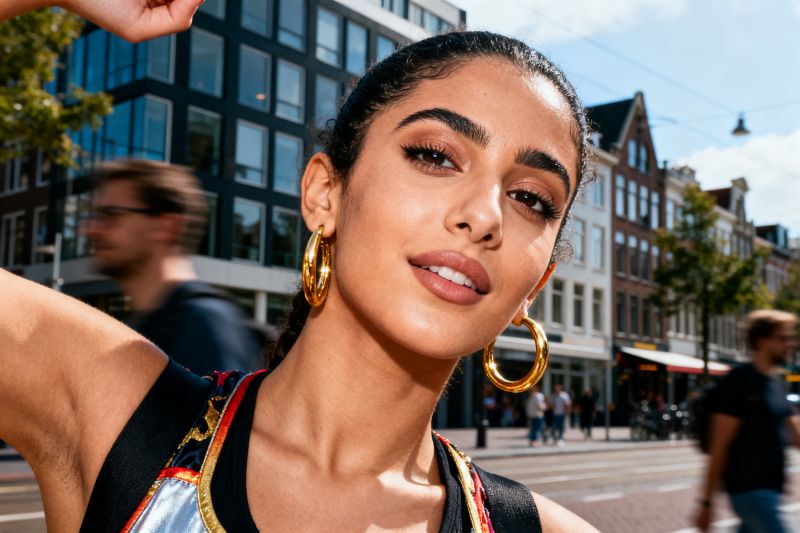
But the label isn't without controversy. Some Dutch-Turkish women I've spoken to find 'turkse chick' reductive—a box that flattens a diverse community into a caricature. One university student in Leiden told me she refuses to be called a turkse chick because it implies she's 'too much' of something: too loud, too flashy, too foreign. Yet others embrace it as a badge of honor. A hairdresser in Amsterdam-West, who's been styling 'turkse chick' hair for two decades, says the term has evolved. 'It used to be an insult,' she said, 'but now it's just a description. These girls are proud of who they are.' The tension is real: the same label can be a celebration or a stereotype。depending on who's using it and why.What's fascinating is how the turkse chick has become a commercial force. Dutch fashion retailers now stock 'turkse chick' essentials—high-waisted jeans, oversized gold earrings, and puffer vests—because they sell. Influencers like Nour and Yasmine have built followings by showcasing this aesthetic, mixing high-street finds with Turkish gold jewelry. On TikTok, the hashtag #turksechick has millions of views, with girls posting get-ready-with-me videos and outfit checks. Brands have taken notice. A mid-range Dutch label recently launched a 'street chic' collection that looked suspiciously like the turkse chick uniform。minus the cultural context. That's the paradox: the style is celebrated, but the community behind it often feels commodified. I asked a 19-year-old from The Hague about this, and she shrugged. 'They copy us, but they don't understand us,' she said. 'But we still look better.'Ultimately。the turkse chick is a case study in how second-generation immigrants carve out identity. These girls aren't simply Dutch or Turkish—they're both, and they dress accordingly. The style is a language: it signals belonging to a community that's often overlooked in mainstream Dutch media. It's also a form of resistance. In a country where right-wing politicians regularly question whether Muslims can be 'truly Dutch,' wearing a gold necklace with a Turkish evil eye and a pair of Nike Dunks is a quiet assertion of dual identity. The turkse chick doesn't need a manifesto. Her presence is the statement. And if you don't get it, that's your problem—she's not dressing for you anyway.